We're here to help
Reach the right team below — sales for kit sizing and dealer inquiries, support for general questions and installation.
If you get voicemail, leave a callback number and we'll return it same day during business hours.
Sales
sales@chargesys.solarKit sizing, custom configurations, OEM & fleet programs, dealer applications, pricing questions.
Support
support@chargesys.solarInstall questions, warranty claims, field troubleshooting, spec sheets, and general questions about ARMORCELL.
Questions and Answers
If yours isn't here, email support@chargesys.solar or call us at (833) 765-7697.
What does ARMORCELL mean?
ARMORCELL is ChargeSys's proprietary technology designation for our engineered CIGS solar assemblies. Every ARMORCELL panel uses ETFE (ethylene tetrafluoroethylene) film as the outer surface rather than the lower-cost PET film competitors use — ETFE is UV-transparent, near-zero moisture permeability, and holds up in harsh environments for 10–20 years where PET top films can show delamination in only a couple years.
How long will ARMORCELL panels last?
Quality CIGS panels are rated for 10–20 year operational lifespans with typical power degradation under 0.5% per year. All self-adhesive ARMORCELL products are backed by a ChargeSys 5-year warranty; portable kits carry 3 years.
Why are ARMORCELL panels particularly well-suited for fleet vehicles like ambulances?
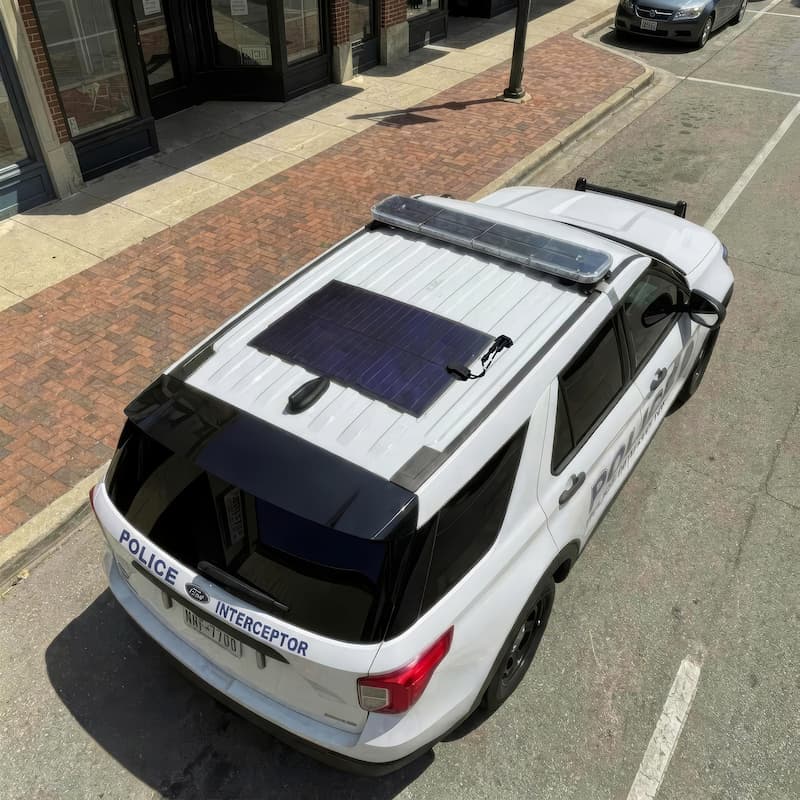
Extreme durability, low profile, low weight, ease of installation, and vibration tolerance are key factors. A 160W ARMORCELL panel weighs about 6 lbs vs. 25–30 lbs for a comparable glass-and-aluminum panel. That means no rails, no drilled holes, and no windage on a $200,000 ambulance. And the CIGS thin-film construction is inherently vibration-tolerant — ARMORCELL CIGS cells don't develop the microcracks that end crystalline panels on mobile installs within a few years.
Do solar panels still produce power on cloudy or rainy days?
Yes — panels generate power from diffuse (indirect) sunlight, not just direct rays. Output is reduced proportionally to light intensity. CIGS thin-film actually performs better in overcast and partial-shade conditions than crystalline silicon, which needs a certain intensity threshold before it starts producing.
Are ChargeSys panels suitable for saltwater marine environments?
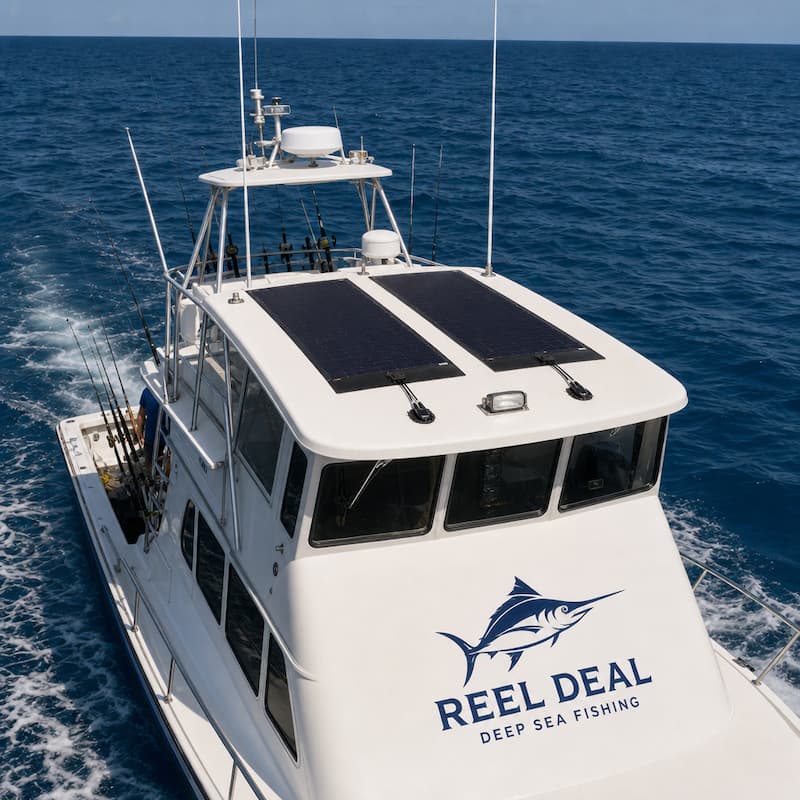
Yes — ARMORCELL panels without aluminum frames and glass are inherently better suited to marine environments. They're IP68 sealed against immersion and salt spray, walkable so deck-mount installs don't need a "keep off" policy, and bond flat to the deck or bimini with no rails, brackets, or through-hull hardware that corrodes.
Can I install a ChargeSys kit myself?
For most applications, yes. The self-adhesive kits are peel-and-stick and take one person under an hour: bond the panel to the roof, run the wire through the supplied gland, connect through the breaker/fuse to the battery via the MPPT controller. Portable kits are even simpler — unroll and connect the wires to the controller and battery.
For ambulance and emergency-vehicle applications, we recommend a licensed electrician or the OEM upfitter do the electrical connection so the install is properly configured to work alongside the electrical control systems.
Ready to size a kit?
Tell us the vehicle, vessel, or equipment and the loads it carries. We'll recommend a solar kit that works for you.
